
· 2 November 2026 · 6 min read
Coastal gardening in DHA Karachi: beating salinity and humidity
A practical approach to coastal planting, irrigation, drainage and maintenance for DHA homes, starting with the difference between salt spray and saline soil.
Updated
By VistaGardens Landscape Team
Treat coastal exposure as several separate problems
A successful coastal garden begins by separating conditions that are often bundled together. Salt carried on wind can damage exposed leaves, while dissolved salts in irrigation water accumulate around roots. Humidity changes how quickly foliage dries, but it does not guarantee that soil contains enough usable moisture. Buildings introduce further differences: a protected courtyard, an open roof and a street-facing boundary can behave very differently within one property. For a DHA home, the useful question is therefore not simply whether a plant tolerates Karachi. It is whether that plant suits the particular exposure, root environment and maintenance arrangements available.
Before choosing a palette, map sunlight, reflected heat, prevailing exposure and sheltered pockets. Note where rainwater collects, where air becomes still and where irrigation wets walls or paving. Ask how water is supplied and whether its source changes. An attractive planting plan should emerge from these observations rather than precede them. This also prevents a common mistake: treating every browned leaf as evidence of salinity when drought, damaged roots, poor drainage or unsuitable light could produce similar symptoms.
Measure the root-zone problem before prescribing a remedy
Soil and irrigation-water testing answer different questions. Soil electrical conductivity helps assess soluble salts already present; water testing indicates what future irrigation may add. Soil pH provides another part of the picture, but a high pH reading is not a salinity measurement. Where infiltration is poor, sodium-related soil behaviour may require investigation alongside compaction and texture. FAO guidance explains that salinity reduces the availability of stored water, whereas infiltration problems restrict how much water enters the soil in the first place. These mechanisms need different responses. 1
Keep visibly different planting zones separate when planning samples. Imported fill, an established border and a low corner beside a drain may not represent the same conditions. Interpret reports using the laboratory's method and the intended plants, rather than comparing unrelated numbers found online. Gypsum, extra fertiliser and blanket soil replacement are not interchangeable cures. The appropriate recommendation may involve water management, physical improvement, a different plant selection or further investigation before any amendment is purchased.
Make water delivery and drainage work together
Coastal planting needs a route for excess water to leave the root zone without damaging neighbouring structures or creating nuisance discharge. Check levels before raising beds, and establish where runoff may legally and safely go. A raised border can improve rooting conditions in some situations, but it cannot correct an unresolved high water table or a blocked outlet. Similarly, adding a layer of gravel beneath a fine planting medium is not a universal drainage solution. The interface between materials can alter water movement in ways that deserve proper design.
Drip irrigation can reduce unnecessary leaf wetting and deliver water close to roots, provided emitters are correctly spaced and maintained. Separate plants with different demands into appropriate watering zones. Salt management may sometimes require additional water to move salts below roots, but only where water quality, drainage and disposal make that practical. FAO cautions that managing saline irrigation also involves environmental consequences and drainage-water handling. More watering without a drainage strategy can exchange one problem for another. 2
Choose plants by exposure, then arrange them intelligently
Plant selection should consider tolerance to airborne salt separately from tolerance to saline rooting conditions. A nursery description such as coastal, tropical or hardy is not sufficient evidence for every position. Confirm botanical identity, mature dimensions, light requirements and water needs before ordering. Where exposure is severe or the planting material is unfamiliar, a modest trial can be more informative than repeating one untested species across the entire boundary. Local availability matters too: the replacement strategy should not depend on specimens that cannot reliably be sourced.
Use the layout to moderate exposure without turning the garden into a stagnant enclosure. A suitable permeable screen can filter wind, while sheltered planting pockets accommodate less exposed foliage. Allow plants room to reach their intended form without constant clipping. Keep vigorous roots and crowded planting away from inspection points, drainage channels and building details. For lawns, do not infer scientific identity from trade names such as Dhaka or American grass. Confirm the actual species or cultivar and its requirements before making claims about salt tolerance, shade performance or maintenance.
Manage humidity through spacing and observation
Humid conditions make plant spacing and watering technique important, but humidity alone does not diagnose disease. Closely packed foliage, repeated overhead irrigation and poor airflow can prolong leaf wetness. Positioning emitters at soil level and avoiding unnecessary evening leaf wetting are useful management choices where practical. Pruning should preserve a healthy structure rather than repeatedly stripping plants to force an artificial outline. Remove damaged material appropriately, clean tools when disease is suspected and investigate recurring symptoms before using pesticides.
Mulch can reduce evaporation and protect the soil surface, but it should not be piled against trunks or crowns. Check the moisture beneath it before increasing irrigation. During humid weather, a dry-looking surface may conceal wet soil below; during windy weather, containers may dry despite comfortable air temperatures. Inspect irrigation distribution, drainage outlets and the undersides of leaves as part of routine maintenance. A useful record notes the affected plant, its position, watering changes and symptom progression, allowing management to respond to evidence rather than seasonal assumptions.
Translate Karachi examples into a DHA-specific brief
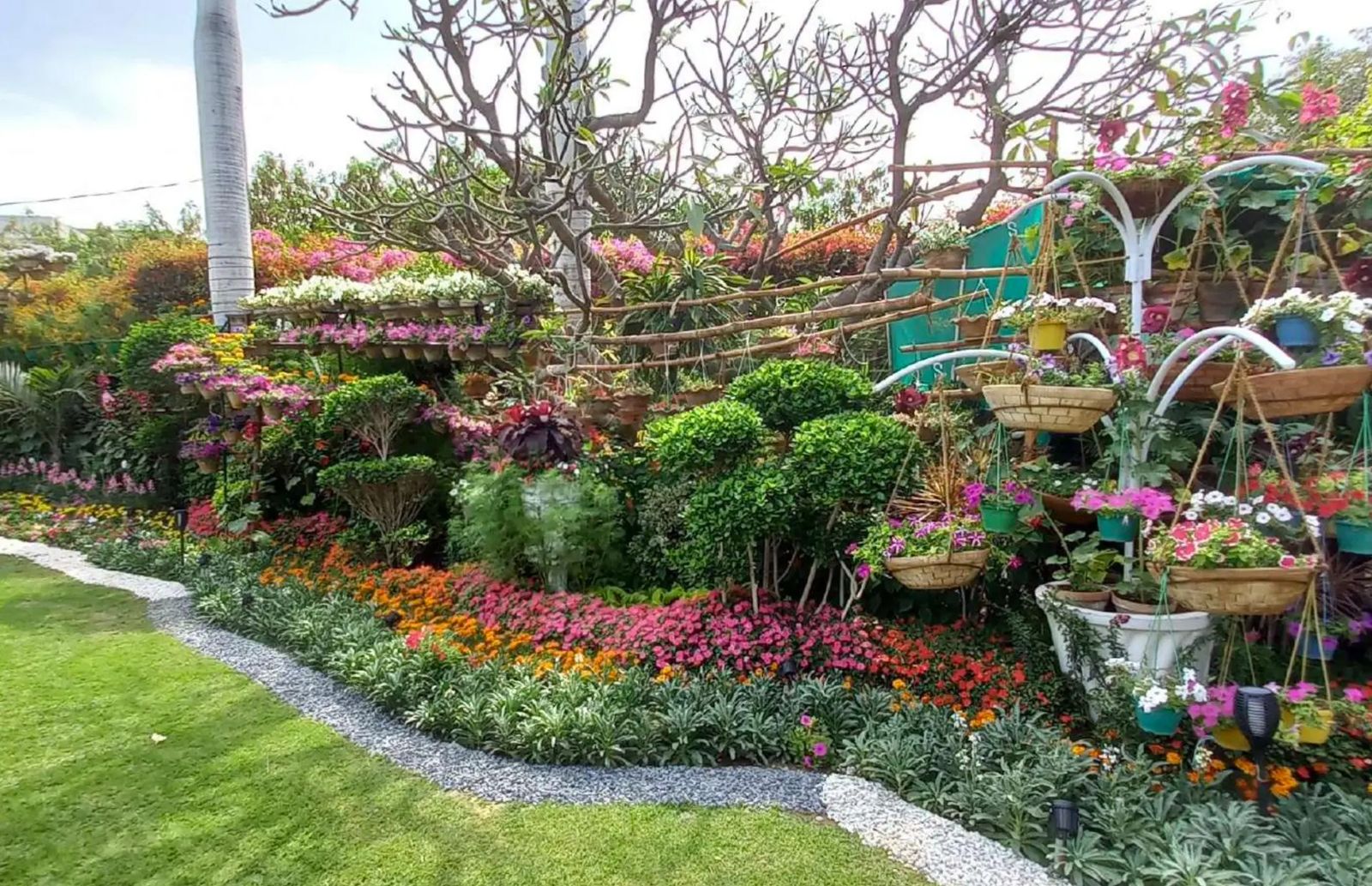
The portfolio's Formal Topiary & Bonsai Garden documents topiary, a bonsai courtyard, layered borders and gazebo flower beds. The Pool & Water Channel Residence documents poolside landscaping, a reflecting channel, a pergola deck and facade planting. Both are Karachi residential examples relevant to design discussions with DHA homeowners; their recorded locations do not establish DHA addresses. They demonstrate documented design elements, not verified salinity performance, particular soil conditions or an automatically transferable plant list.
For a new coastal garden, turn inspiration into a written brief covering exposure zones, soil and water assessment, drainage, plant identification, irrigation access and aftercare responsibilities. Decide which areas deserve intensive attention and which should remain simple. Ask for maintenance instructions tied to actual plants and installed equipment, including what to inspect when symptoms appear. Beating coastal conditions is less about finding one indestructible species than about coordinating the garden's root environment, shelter, water supply and ongoing care.
Explore related work
View project: formal topiary bonsai garden · View project: pool water channel residence
Explore garden design · Explore site survey soil testing · Explore irrigation systems · Explore garden maintenance
Garden services in dha karachi
Sources and further reading
FAO: Water quality for agriculture — infiltration problems
FAO: Management principles and practices for safe use of saline water
Related from VistaGardens
Want help with your garden?
Book a consultation and we'll visit your space anywhere in Karachi.
Get a free site visit & quote