
· 2 November 2026 · 5 min read
A guide to gardening in Bahria Town Karachi: soil, wind, sun and water
A practical, assessment-led approach to planning a Bahria Town garden, from representative soil samples and light mapping to irrigation checks and realistic aftercare.
Updated
By VistaGardens Landscape Team
Treat your garden as a particular site
A useful gardening plan begins with your own plot rather than a neighbourhood-wide recipe. VistaGardens' supplied service data identifies sunlight, wind exposure, water source and existing soil as inputs to garden design in Bahria Town Karachi. That does not mean every garden has the same constraints. One property's exposed frontage and sheltered rear courtyard may need different treatments, and conditions can differ between neighbouring plots. Start by recording what exists before ordering soil, turf or plants, then separate measured findings from assumptions and visual impressions.
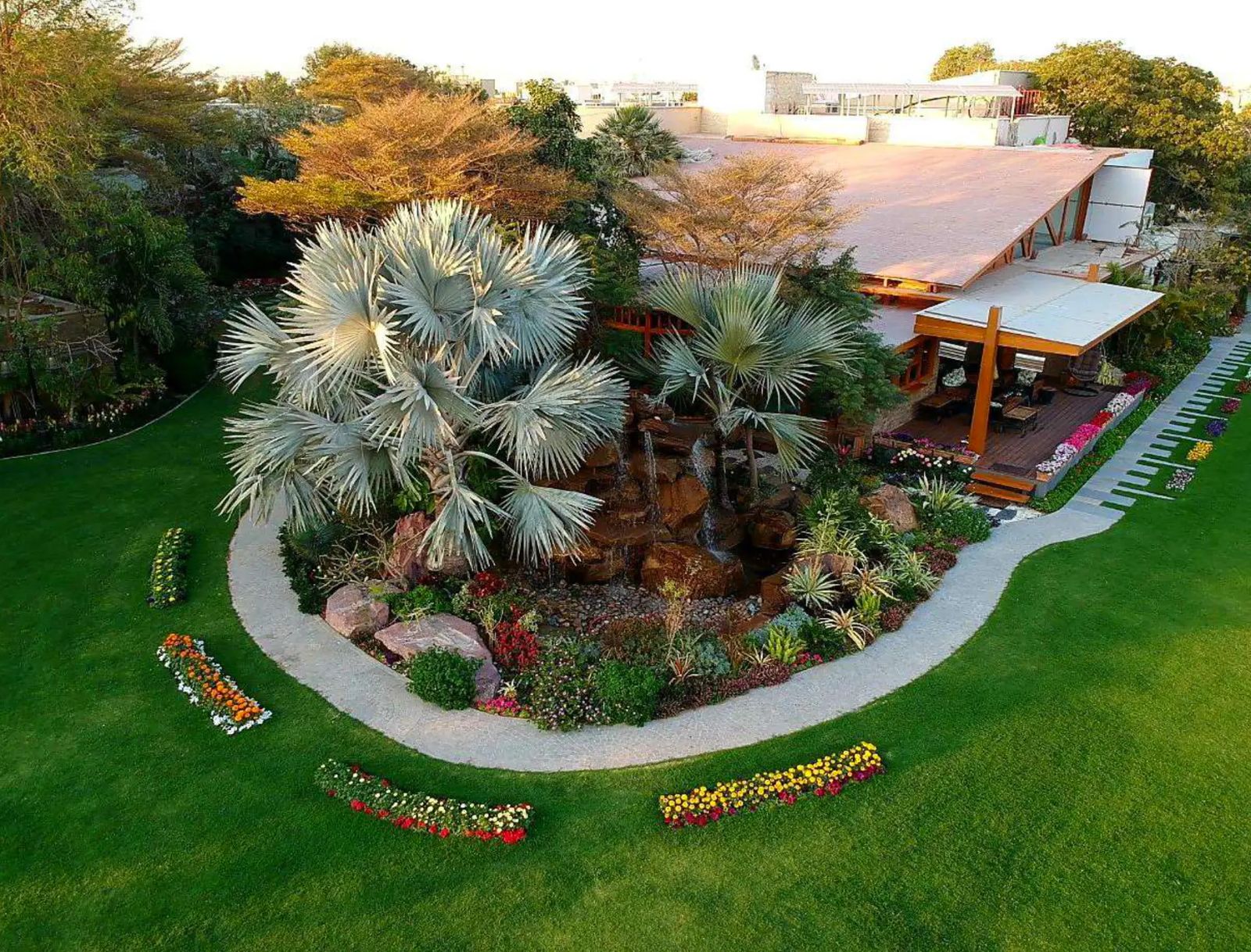
This guide offers practical advice rather than a diagnosis of a surveyed property. The real residential photograph illustrates a Karachi garden, not measurements of a particular Bahria Town plot. Start with your intended use, note the existing conditions and arrange testing where the proposal needs evidence. A garden plan should fit both the property and the level of care you can provide.
Find out what the soil needs before adding anything
VistaGardens' site-survey and soil-testing scope includes possible assessment of pH, electrical conductivity for salinity, texture, drainage and irrigation-water quality. The appropriate test panel should be agreed for the problem being investigated. Collect representative information from distinct areas rather than assuming one sample describes every bed. Note where soil has been imported, where construction activity occurred and where symptoms appear. These observations help frame the investigation, but they do not replace laboratory results or establish that a particular amendment is necessary.
Ask for recommendations that explain the problem, proposed treatment and evidence supporting it. Avoid approving a universal mixture simply because it is described as standard garden soil. The company's lawn-preparation guidance also cautions that sand alone is not a remedy for every soil. If a contractor proposes substantial excavation or imported material, establish why that depth and material are appropriate and how drainage will be addressed. This approach keeps preparation tied to actual conditions instead of treating more material as an automatic improvement.
Map sunlight where the plants will actually grow
Observe the garden at several times of day and mark where direct sun reaches beds, lawn areas and containers. Note whether nearby walls, buildings or vegetation change the pattern. Shade has different degrees, from dappled to deep, and plant selection should follow the actual conditions rather than a simple sunny-or-shady label. 1 The extension source supports that general principle; it is not being used as a Karachi planting calendar or a list of locally appropriate species.
Build the use plan around those observations. You may want a seating area in a comfortable position while reserving another area for planting that requires stronger light. Consider how proposed trees or structures will change conditions over time, especially if a lawn is part of the design. Ask the designer to show both the intended mature planting and the resulting space beneath it. A photograph of another garden cannot answer those questions for your property, and a pleasing render does not substitute for a site-specific sunlight assessment.
Observe exposure and leave room for mature planting
Wind exposure is an explicit consideration in the company's garden-design service. For your property, record where exposure is most noticeable and whether walls, corners or openings create contrasting conditions. Distinguish those observations from claims about prevailing winds that would require appropriate local information. If a proposal includes screening or support structures, ask how it interacts with access, light and the available planting space. Do not assume that a plant used successfully in a sheltered courtyard will suit an exposed position without assessment.
Mature size matters as much as the appearance of nursery stock. A planting plan should account for root space, canopy development, clear routes and the access needed for care. Where containers, raised planters or structures are proposed, relevant construction and safety checks should be included in the scope. VistaGardens' terrace-garden guidance, for example, makes structural and waterproofing review a prerequisite where relevant. For an ordinary ground-level garden, the same principle of coordination applies: planting decisions should work with the property rather than conceal unresolved constraints.
Check both water quality and irrigation behaviour
Begin with the water actually available for the garden and investigate quality where appropriate. The supplied service data recommends representative water testing rather than assuming all sources are equivalent. Irrigation design should also consider pressure, plant requirements and the selected delivery method. If a garden has dry patches, first establish whether coverage, blocked equipment, soil conditions or another factor is involved. Increasing every watering period may fail to address the cause and can obscure differences between areas that should be managed separately.
General watering guidance recommends choosing plants for existing conditions, checking soil moisture and directing water to the root area. It also supports early-morning watering and grouping plants by moisture needs. 2 Use these as principles, not a fixed Karachi runtime: the correct schedule depends on the plants, soil, weather and installation stage. Ask whoever installs the system to explain how it is checked and adjusted. A timer setting is an operating instruction, not proof that the whole garden is receiving appropriate water.
Turn observations into a manageable care plan
After planting, keep a simple record of watering changes, visible symptoms and work carried out. Photograph the same areas periodically so that changes are easier to describe. If plants decline, investigate before assuming pests or nutrient deficiency: the company's diagnostic service notes that drainage, saline water and heat stress can resemble pest damage. That is a reason to seek a diagnosis, not evidence that any one of those causes applies to your garden. Avoid adding several treatments at once without understanding what each is intended to correct.
For a professional assessment, prepare your location, site photographs, intended uses, water-source information and any previous test results. Request a written scope distinguishing survey, testing, design, installation and aftercare, with responsibilities and exclusions stated clearly. VistaGardens' service data says guarantee terms are confirmed in writing rather than assumed. The practical aim is not a universal Bahria Town planting formula. It is a garden whose soil preparation, plant choices, irrigation and care follow the conditions of your own property and the amount of maintenance you can realistically provide.
Explore related work
Explore site survey soil testing · Explore garden design · Explore irrigation systems · Explore after installation care
Garden services in bahria town karachi
Sources and further reading
VistaGardens site survey and soil testing scope
VistaGardens garden design scope
VistaGardens irrigation systems scope
VistaGardens pest, disease and nutrition management scope
Related from VistaGardens
Want help with your garden?
Book a consultation and we'll visit your space anywhere in Karachi.
Get a free site visit & quote