
Quick answer
Select for measured site conditions, not a generic “coastal” label. Heat tolerance, drought tolerance, salt-spray tolerance and root-zone salinity tolerance are different traits; verify species and cultivar, improve drainage, and trial uncertain plants before mass planting.
Key takeaways
- Drought tolerance is not proof of saline-water tolerance.
- Salt spray and saline soil require separate assessment.
- Even tough plants need establishment water.
- Use regional references cautiously and avoid unsuitable introduced species.
Describe the stress before choosing a plant
Record direct sun, reflected heat from walls, prevailing wind, distance and exposure to sea spray, soil depth and irrigation source. Leaf-edge burn can result from salts, dry roots, wind or fertiliser injury; appearance alone does not identify the cause. Test water and soil where salinity is suspected, and check for compaction or poor drainage before blaming a species.
A plant described as coastal in another country may have been assessed mainly for salty air rather than regular irrigation with brackish water. UF/IFAS coastal lists are useful screening references, but Florida soils, rainfall, invasive-species rules and nursery stock differ from Karachi. Their lists do not establish locally native status or guarantee performance. Use independent local experience and trial planting to narrow the choices.
A shortlist to investigate, not a universal palette
The distinctions below deliberately avoid numerical salinity limits without a defined testing method and cultivar. Confirm local suitability, mature size, hazards and availability before ordering.
| Candidate | Potential use | Limitations to verify |
|---|---|---|
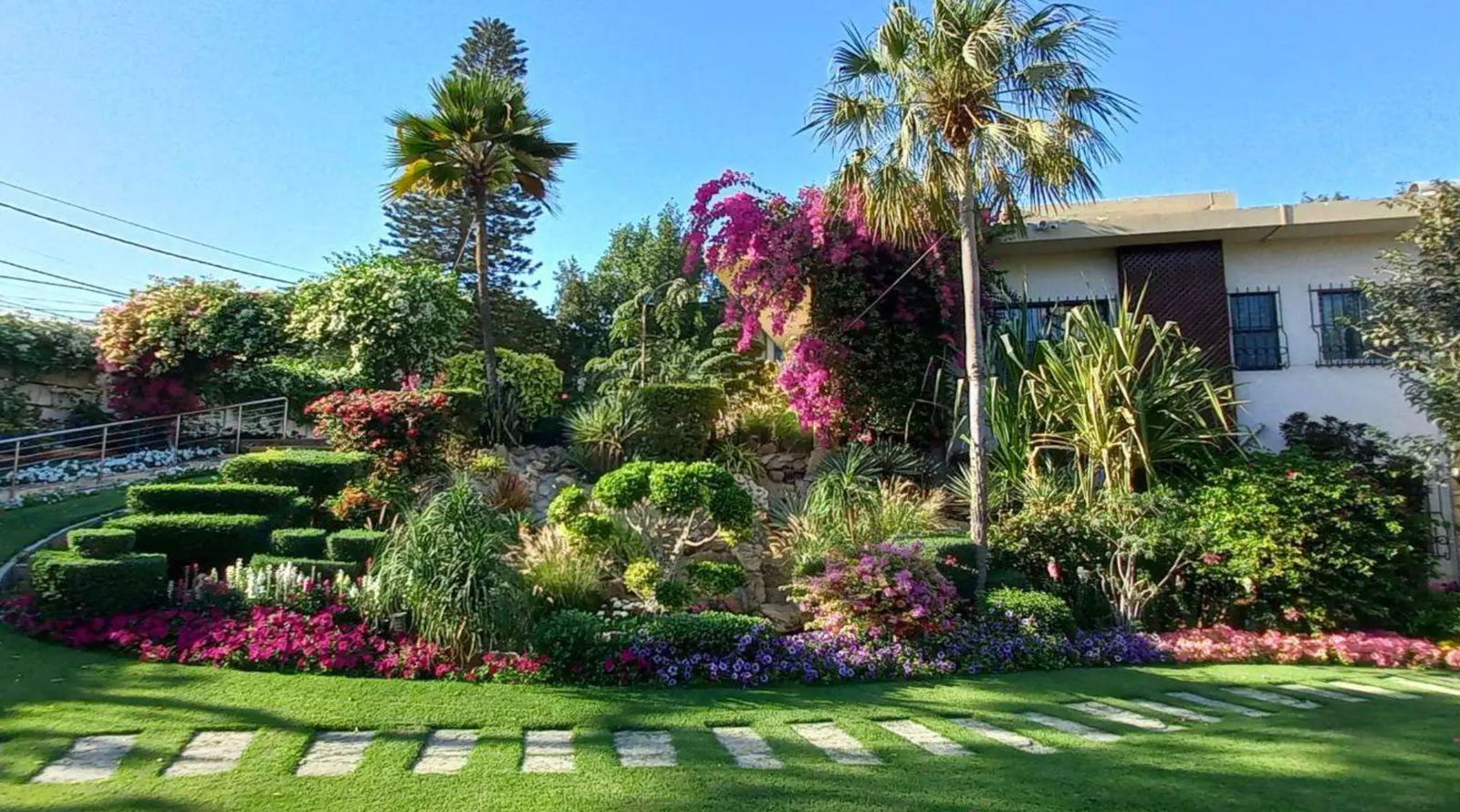
| Bougainvillea species and named cultivars | Sunny flowering screen or climber with structural support | UF/IFAS describes moderate salt tolerance, not immunity; protect from severe exposure and avoid waterlogging. Thorns affect placement. |
| Portulaca grandiflora and suitable cultivars | Low warm-season colour in sunny, freely draining beds | Heat/drought suitability does not by itself establish tolerance of saline irrigation; trial it. |
| Plumeria species and cultivars | Flowering accent in a warm, well-drained position | Assess wind, root-zone salts and drainage locally; sap requires care and it is not an evergreen screening guarantee. |
| Phoenix dactylifera, where site scale suits | Large long-term palm specimen | Assess provenance, mature size, spines, access and verified water tolerance; not a small-bed solution. |
| Locally appropriate native or well-adapted shrubs | Mixed shelter and lower-input structural planting | Obtain botanical identification and evidence of local performance; native origin alone does not prove suitability for every site. |
Use layout to reduce exposure
Place the most exposed edge under a more tolerant planting strategy and shelter sensitive plants further inward. Wind filtering can be more useful than a solid barrier that creates turbulence, but any shelter planting itself needs suitable species and establishment care. Do not crowd trees against foundations or place spiny plants beside narrow circulation routes. Mature canopy and root space should determine spacing, not the nursery pot’s appearance.
Mixed planting spreads risk better than repeating one untested species across the whole property. Keep high-water seasonal displays in manageable zones rather than scattering them throughout dry-adapted beds. Avoid introducing aggressive or invasive species simply because an overseas coastal list recommends them. Verify local ecological and legal suitability, particularly near natural habitats or drainage channels.
Establishment is different from long-term tolerance
Inspect root quality and reject badly damaged, diseased or severely pot-bound stock. Acclimatise nursery-grown plants to the intended exposure and plant at an appropriate depth in prepared, draining soil. Keep the root ball adequately moist while roots extend into the surrounding ground. A mature plant’s drought tolerance cannot protect a small, recently transplanted root system from drying out.
Apply an appropriate mulch layer without piling it against stems or palm trunks. Keep irrigation directed to the root zone where suitable and avoid repeatedly wetting sensitive foliage with saline spray. Do not add concentrated fertiliser to a stressed root ball. Large specimens may need a documented support and inspection plan, with ties reviewed and removed when no longer needed.
Manage the source as well as the species
FAO guidance emphasises that long-term salinity control requires drainage. Salt-tolerant planting can reduce risk but cannot make a closed, waterlogged basin sustainable. A leaching plan needs suitable water, an outlet and a reasoned assessment; gypsum is relevant only to particular diagnosed soil conditions, not every salty garden. Test imported topsoil and organic amendments when their quality is uncertain.
Start with a small trial representing the harshest exposure and record survival, growth, leaf condition and water quality over time. Replace weak candidates before expanding the palette. The catalogue offers plant installation and site testing; ask for botanical names, sizes, quantities, establishment care and any actual written guarantee terms. This editorial shortlist does not claim that the company grows or supplies every candidate.
