
Quick answer
Check water level, flow, leaks and electrical safety before treating cloudy water or algae. Keep debris and nutrient inputs down, service filters correctly, and use only treatments compatible with the feature, its materials and any fish or wildlife.
Key takeaways
- Separate ornamental-fountain care from fish-pond and swimming-pool treatment.
- Never handle powered equipment while standing in water.
- Evaporation removes water, not its dissolved salts.
- A circulating feature still needs inspection for stagnant pockets.
Know what kind of feature you own
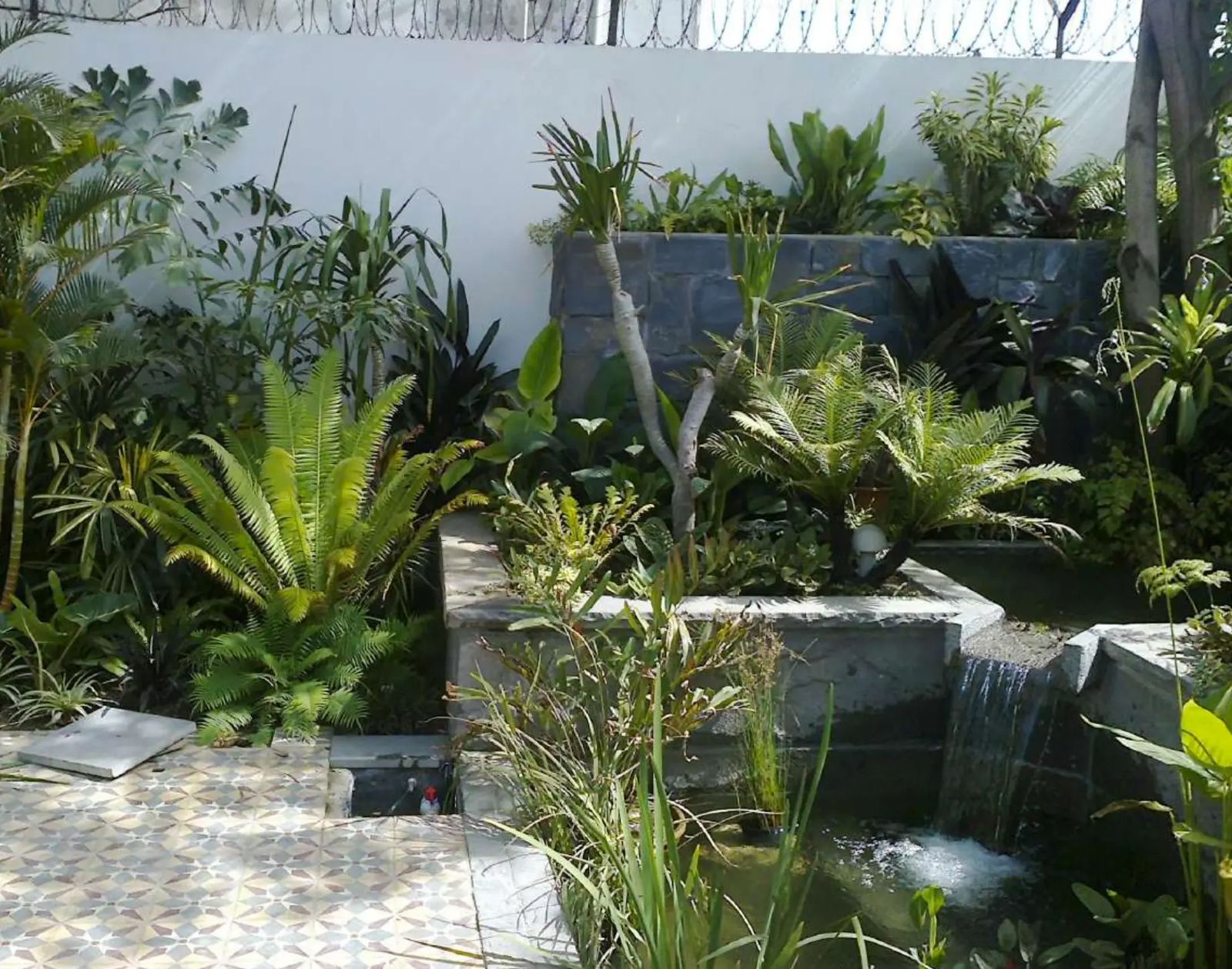
Record whether the installation is a closed ornamental fountain, a planted pond, a fish pond, a water wall or a swimming facility. They are not interchangeable. A decorative basin may tolerate a manufacturer-approved disinfectant that would harm fish or biological filtration. Swimming water requires an appropriate specialist water-treatment regime beyond this garden guide. Keep the pump, filter, liner and treatment instructions together.
Identify isolation points, access covers, overflow and drain routes. Child and pet safety should be designed into the installation rather than delegated to the cleaning schedule. Use appropriate barriers or secure covers where necessary and check local requirements. Wet surfaces are slip hazards even when the water looks clean. Electrical protection, earthing and weatherproof connections need competent design and inspection.
Use a simple inspection rhythm
Frequency depends on debris, exposure, livestock and equipment; the intervals below are starting inspection intervals, not mandatory service frequencies. Stop the system if it runs dry, trips protection or produces an electrical warning sign.
| When | Owner observation | Action or escalation |
|---|---|---|
| Daily or whenever used | Water level, flow, sound, slippery edges and visible leaks | Top up appropriately; isolate unsafe equipment rather than repeatedly restarting it. |
| Weekly as a starting point | Leaves, intake screens, accessible stagnant pockets and mosquito activity | Remove debris and clean accessible screens safely; inspect pockets even if the main jet flows. |
| As pressure/flow or the manual indicates | Mechanical filter loading and pump delivery | Isolate power and follow the approved cleaning/backwash procedure. |
| Periodically and after storms | Overflow, joints, cables, covers and surrounding drainage | Arrange repairs or specialist inspection; never open live electrical components. |
Distinguish evaporation from leakage
Mark a normal operating water level and compare losses under similar weather and operating conditions. Splash, wind and evaporation can all lower the level; wet ground, a consistently falling reservoir or losses linked to pump operation may indicate leakage. Never let the pump run below its specified safe level. Ask a technician to distinguish plumbing leaks from liner or masonry problems before applying sealants.
Evaporation leaves most dissolved salts behind. Repeated top-up with mineral-rich water can therefore increase concentration and scaling. Test the supply and, where useful, the basin water. Partial replacement may be appropriate, but the amount and discharge route depend on water chemistry, treatment products and environmental constraints. Do not empty chemically treated water onto sensitive planting or into a storm drain without checking suitability and local requirements.
Control the causes before reaching for chemicals
Warmth, light and nutrient availability encourage algae. Remove fallen leaves and avoid fertiliser runoff from nearby beds. In a planted pond, some algae is natural and not automatically a failure; RHS guidance cautions against trying to eradicate every trace. In a formal water wall, appearance requirements may be different, but the treatment still has to match the installation.
Clean mechanical filtration according to its specification. Biological media supporting fish should not be indiscriminately sterilised or washed with chlorinated water. Avoid sudden complete pond clean-outs unless genuinely necessary; they can disrupt the system. Never mix chemicals, use household detergents casually or assume that pool tablets suit an ornamental pond. Follow product labels, material compatibility and fish/wildlife restrictions, and seek specialist help for recurring blooms or distressed fish.
Plan for heat, rain and access
In hot weather, shallow water can warm quickly and oxygen conditions can deteriorate in stocked ponds. Watch behaviour such as fish gasping at the surface and obtain appropriate aquatic advice promptly. After rain, remove debris and check whether dirty runoff entered the basin. Keep tank lids and access panels secure, and eliminate disconnected stagnant containers that can support mosquitoes.
The catalogue lists water-feature servicing for pump checks, filter cleaning, flow assessment and surface/algae cleaning. Ask whether draining, water testing, replacement parts, specialist electrical work and disposal are included or excluded. Record model numbers, baseline flow and each intervention so the next technician can diagnose a trend rather than start from guesswork.

